Building maintenance responsibility in UAE is one of the most commonly disputed topics between landlords and tenants and one of the most searched questions on UAE legal forums, Quora, and Khaleej Times Q&A columns. A 2024 MoveSouq survey found that 83% of Dubai residents faced at least one maintenance issue in a 6-month period, yet only 50% of landlords actively paid for repairs. The confusion exists because UAE law is clear in principle but is regularly misunderstood in practice. This guide explains exactly who is responsible for building maintenance in UAE under Dubai Law No. 26 of 2007, when that responsibility shifts, and how property managers and AMC providers fit into the equation.
What Does UAE Law Say About Building Maintenance Responsibility?
Dubai Law No. 26 of 2007 (the Dubai Tenancy Law) establishes the primary legal framework for maintenance responsibilities between landlords and tenants across the UAE. Article 16 of this law states that the landlord must repair any defect or damage that affects the tenant’s ability to use the property unless both parties have agreed otherwise in writing. The Dubai Land Department (DLD) and the Real Estate Regulatory Agency (RERA) enforce this framework across all residential and commercial properties in Dubai. In 2025, the DLD strengthened compliance requirements, requiring landlords to address major repairs within a stipulated timeframe to avoid penalties. This law applies to apartments, villas, offices, and commercial buildings across Dubai.
What Repairs Is the Landlord Responsible for in the UAE?
The landlord in the UAE is legally responsible for all major structural and mechanical repairs that affect habitability or normal use of the property. Under Article 16 of Dubai Law No. 26 of 2007, the following repairs fall under landlord responsibility:
- Air conditioning systems
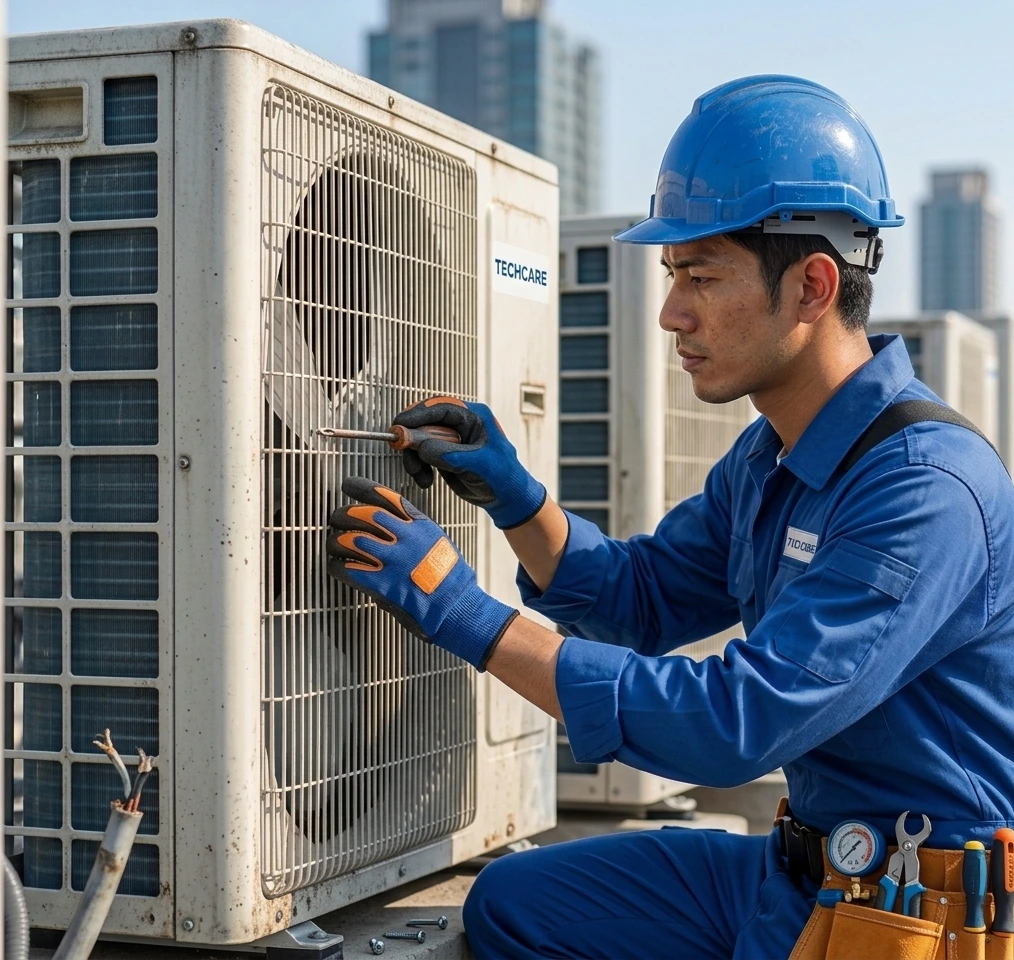
AC compressor failure, chiller breakdowns, duct damage, and cooling system replacements are landlord obligations. DEWA data shows AC accounts for 60–70% of residential electricity consumption in Dubai summers, making it a habitability essential. - Plumbing and water leaks
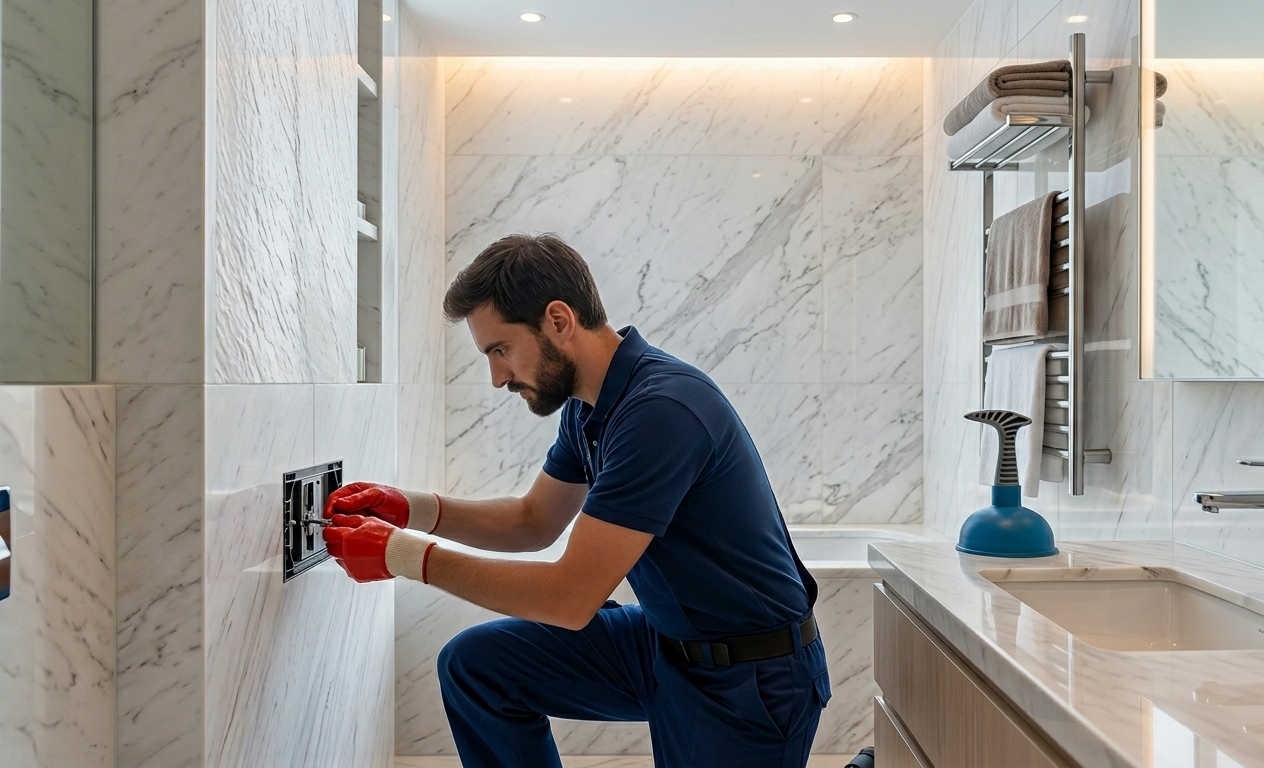
Ceiling leaks, burst pipes, drain blockages in shared infrastructure, and water heater failures are major repairs assigned to the landlord. - Electrical faults
Recurring electrical failures, panel defects, and wiring issues that affect the use of the property. - Structural repairs
Cracks in walls, roof damage, foundation issues, and building façade problems. - Drainage systems
Blocked or failing drainage that affects occupancy and use.
A landlord cannot legally require a tenant to fund replacement of aged equipment (for example, a 12-year-old AC compressor) simply because the equipment is old. Equipment age is not a valid basis for shifting repair costs to the tenant under RERA guidelines.
What Repairs Is the Tenant Responsible for in the UAE?
The tenant in the UAE is responsible for minor maintenance and day-to-day upkeep of the rented property. Tenant responsibility typically covers the following:
- Minor fixture repairs
Replacing light bulbs, door handles, cabinet hinges, and taps. - Damage caused by misuse
Any breakage or damage that results from negligence or misuse by the tenant or their guests. - Basic cleaning and upkeep
Maintaining cleanliness and reporting early signs of damage promptly. - Minor plumbing
Unclogging drains where the blockage is caused by tenant use (not building infrastructure).
Some tenancy contracts in Dubai include a cost threshold clause typically AED 500 to AED 1,000 where repairs below that value are treated as tenant responsibility. However, Dubai courts do not automatically enforce these clauses if the repair is structural or affects habitability. Any clause that contradicts Article 16 of the Dubai Tenancy Law can be challenged at the Rental Disputes Settlement Centre (RDSC).
Can a Tenancy Contract Change Who Is Responsible for Maintenance in UAE?
A tenancy contract can reassign maintenance responsibility if both parties agree in writing but only within legal limits. The following rules apply:
- A contract can assign minor repairs to the tenant without legal issue.
- A contract cannot waive the landlord’s responsibility for major structural or mechanical repairs that affect habitability.
- Clauses that require tenants to fund AC replacement, full electrical rewiring, or structural repairs are legally unenforceable under RERA guidelines.
- A contract can establish an AED threshold (e.g., repairs under AED 500 are tenant responsibility), but courts evaluate each case based on whether the repair affects habitability, not just its cost.
Before signing any tenancy agreement in the UAE, tenants should review all maintenance clauses and seek clarification from the Dubai Land Department or a registered legal advisor if any clause appears to transfer major repair obligations.
Who Is Responsible for Maintenance in Commercial Buildings in UAE?
Commercial building maintenance in the UAE operates under the same legal framework as residential properties but with greater complexity because multiple parties are often involved: the building owner, the property management company, and the business tenant.
In commercial leases, the building owner remains responsible for:
- MEP systems – Mechanical, electrical, and plumbing infrastructure serving the building.
- HVAC systems – Central cooling, ventilation, and air handling units.
- Structural integrity – Façade, roofing, columns, and shared infrastructure.
- Shared area maintenance – Lifts, lobbies, car parks, and common facilities.
The business tenant is typically responsible for:
- Internal fit-out maintenance.
- Equipment installed by the tenant.
- Minor interior repairs within the leased space.
Commercial building owners who manage multiple properties across Dubai, Abu Dhabi, or Sharjah commonly use an Annual Maintenance Contract (AMC) to ensure planned, documented maintenance across all systems, reducing reactive failures and legal disputes with tenants.
What Role Does a Property Manager or Maintenance Company Play?
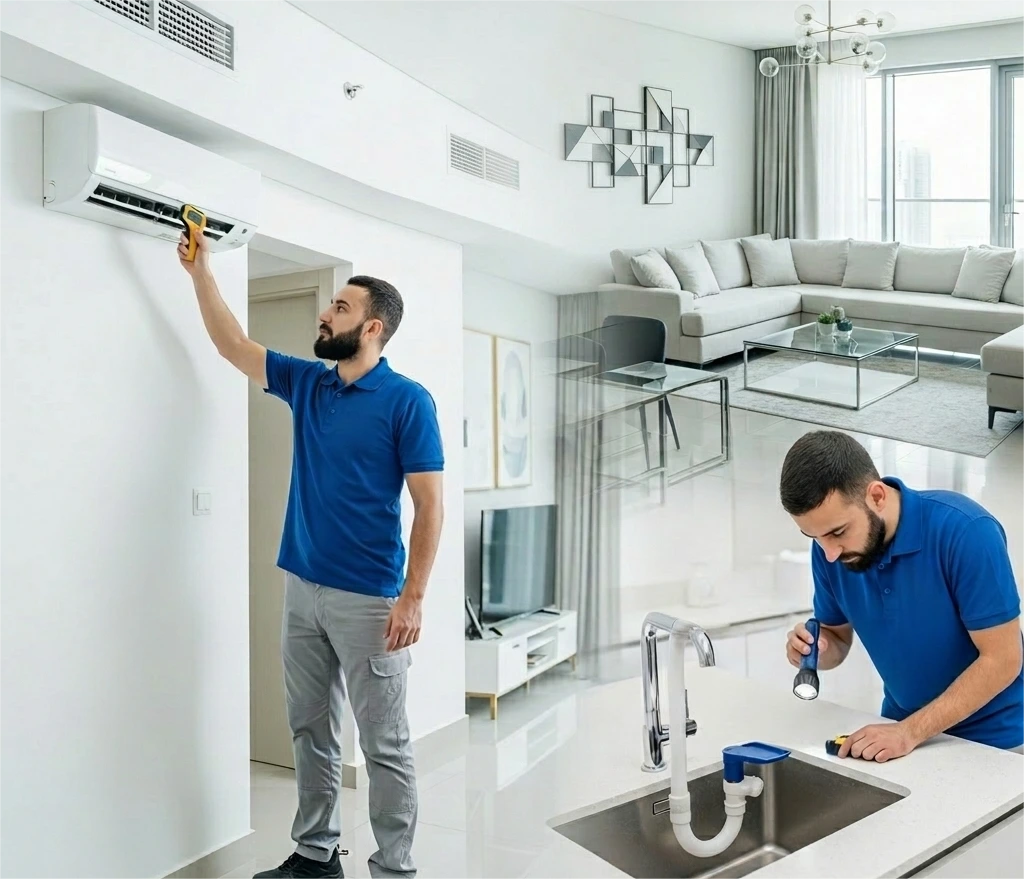
A property manager or professional building maintenance company in UAE acts as the operational layer between the building owner and tenants. Their role covers:
- Planned Preventive Maintenance (PPM)
Scheduled inspections of HVAC systems, MEP infrastructure, electrical panels, plumbing, and drainage systems before failures occur. - Reactive maintenance response
Attending urgent issues such as AC failures or electrical faults with defined response times. - Single point of contact
Replacing multiple uncoordinated contractors with one accountable team. - Work order tracking
Logging, completing, and documenting every maintenance request for compliance records.
Without a structured maintenance partner, property owners managing multiple vendors face delays, unclear responsibility, and recurring tenant complaints, the same failure pattern described in the Let’s Fix It Building Maintenance service page. A professional AMC removes this operational fragmentation entirely.
What Should You Do If Your Landlord Refuses to Fix a Problem in UAE?
If a landlord in the UAE refuses a legitimate maintenance request, tenants have a clear escalation path under RERA and the Dubai Tenancy Law:
- Submit a written complaint to the landlord or property manager – email or registered letter creates a formal record.
- Allow reasonable response time 7 to 14 days for non-emergency repairs is standard.
- File a complaint at the Rental Disputes Settlement Centre (RDSC) the RDSC under the Dubai Land Department handles all residential and commercial tenancy disputes.
- Emergency repairs If a repair is urgent (flooding, electrical hazard, total AC failure in summer) and the landlord is unresponsive, tenants may arrange the repair themselves and claim reimbursement through the RDSC. Retain all invoices and correspondence.
The RDSC contact number is 800-LAND (5263) and complaints can be submitted online through the Dubai Land Department portal.
How Does an AMC Prevent Maintenance Disputes in UAE Buildings?
An Annual Maintenance Contract (AMC) is a service agreement between a building owner and a certified building maintenance company in UAE that covers scheduled inspections, planned preventive maintenance, and priority repair support for a fixed annual fee.
AMC benefits for UAE building owners include:
- Fewer tenant disputes
Documented maintenance records demonstrate landlord compliance with Article 16 obligations. - Lower long-term costs
A single AC emergency repair in Dubai costs AED 800 to AED 2,500. An AMC covering the same system costs less annually than 3–4 emergency call-outs. - Regulatory compliance
Buildings in Dubai must meet Dubai Municipality, Dubai Civil Defence (DCD), and DEWA standards. An AMC with a licensed provider supports ongoing compliance. - Predictable budgeting
Fixed-fee annual contracts convert unpredictable emergency costs into planned operational expenses. - Single accountability
One maintenance partner replaces multiple uncoordinated vendors, reducing response delays and documentation gaps.
Let’s Fix It provides structured building maintenance services across UAE covering residential apartments, commercial offices, and large-scale facilities in Dubai, Abu Dhabi, and Sharjah.
Ready to Resolve Your Building Maintenance Challenges in UAE?
Whether you manage a residential building, commercial office, or multi-property portfolio in Dubai or across the UAE, Let’s Fix It provides structured building maintenance services with planned inspections, documented work orders, and a single point of contact.
Request a site inspection today and get a clear maintenance plan that protects your property, keeps tenants satisfied, and ensures compliance with UAE building regulations.
FAQs
Who pays for AC repair in Dubai, landlord or tenant?
The landlord pays for AC repair in Dubai in all cases where the fault is not caused by tenant misuse. This is mandated under RERA guidelines and Law No. 26 of 2007.
Can a tenant deduct repair costs from rent in UAE?
No, UAE law does not permit automatic rent deduction. Tenants must first notify the landlord in writing, allow reasonable repair time, then seek reimbursement through the RDSC if refused.
How quickly must a landlord respond to maintenance requests in UAE?
RERA guidelines require landlords to address urgent habitability issues promptly. The Dubai Land Department's 2025 update recommends a response within 7 days for major repairs. Delays beyond this can support an RDSC complaint.
Does an Annual Maintenance Contract remove maintenance disputes?
Yes, an AMC with a licensed building maintenance company in UAE clearly defines response times, scope of work, and responsibility for each system. This eliminates the grey areas that lead to landlord-tenant disputes.